
- Posts :
By Abby Rupsa, Founder & Principal Designer of Botanical Living, in collaboration with
Building a custom home in the Denver area is a wonderfully exciting process. It fulfills a dream for the future: raising children, creating memories, celebrating holidays, or retiring in your forever home. The wish list is long, and the process to reach the finish line can be even longer.
And there are so many custom home options, with plans to draft, layouts to refine, and materials to select. There are also cabinet profiles to approve and paint colors to test. Tile, lighting, plumbing fixtures, hardware: every detail is considered. There are scheduled meetings at milestone points to ensure timelines are moving, budgets are aligned, and every “i” is dotted and every “t” crossed.
However, have equal preparations been made for your new home’s landscaping design? Landscaping, often overlooked by new home buyers, is an essential part of any custom home build and initial project planning.
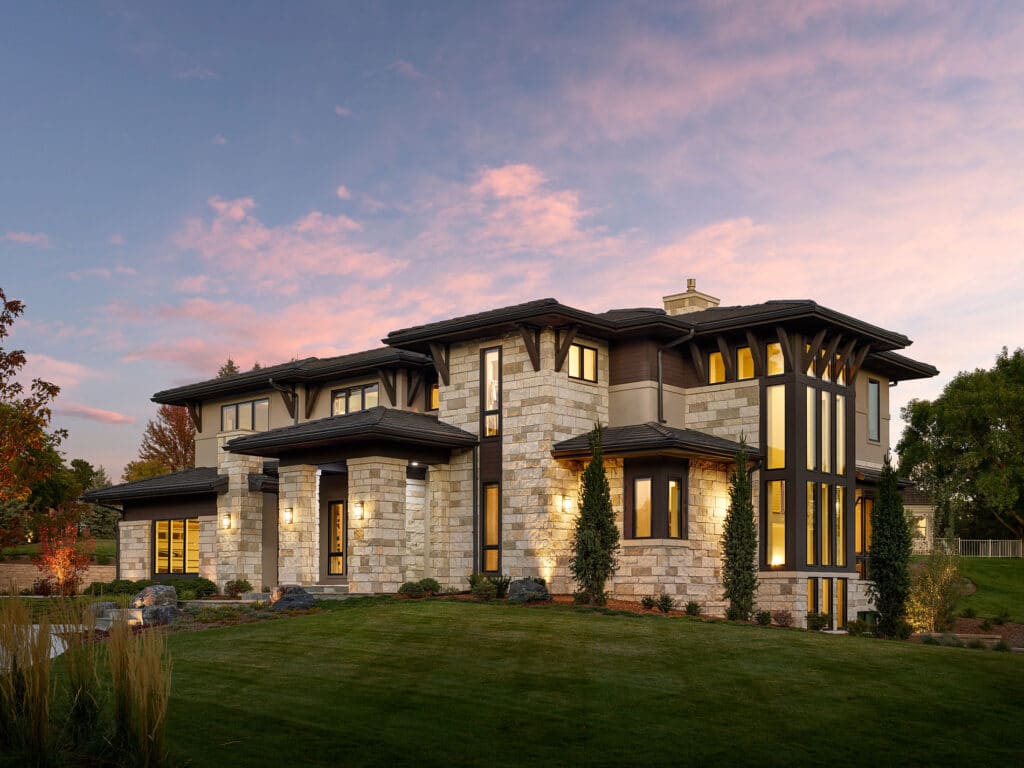
This is why Thomas Sattler Homes collaborates with partners like Botanical Living in Denver to integrate landscaping and other essential outdoor living environments that feel deeply connected to each new home’s architecture, the land, and the people who inhabit them.
The Importance of New Home Landscaping
Even in the most orchestrated custom builds, landscaping is often treated as an afterthought. It is usually addressed at the very end when construction is wrapping up, and the budget allocated for the house itself has largely been exhausted.
Unfortunately, when landscaping is overlooked or rushed, the result is often an exterior that feels disconnected from the architecture. This is often the case with “value” landscaping that ends up incongruent with a beautiful new luxury home.
Your new custom home deserves far more than that. It should not be considered filler or decoration, and it is certainly not the leftover line item. Landscaping is the frame that shapes the very first impression of how your home is experienced from the moment someone arrives, and it should be thoughtfully planned long before a certificate of occupancy is issued.
The Rise of Outdoor Living and the Illusion of Simplicity
During the pandemic, the home industry exploded. Our homes became offices, classrooms, restaurants, gyms, and sanctuaries. Outdoor space suddenly wasn’t optional; it was essential. Homeowners began carving out additional living space wherever they could. Backyards became gathering hubs. Front porches became social zones. Fire pits became places of Connection.
At the same time, social media flooded our feeds with curated, glossy images of perfectly styled outdoor spaces. Pinterest boards filled with outdoor kitchens, porcelain patios, sunken lounges, plunge pools, and layered plantings. Instagram showcased seamless indoor-outdoor transitions framed by lush greenery and architectural hardscape. And now, with the rise of AI visualization tools, anything you can dream of can be instantly rendered into a beautiful image. But … pretty pictures are not plans.
A curated image doesn’t account for grading, address drainage, or factor in soil conditions. It doesn’t evaluate sun exposure, microclimates, or material longevity. It certainly does not calculate budget realities. Behind every stunning outdoor space is a thoughtful system of design development, engineering coordination, material sourcing, construction sequencing, and budget management. And yes, all of those curated spaces come with a very real investment attached.
The Real Cost of Landscaping: Then and Now
Not long ago, homeowners installing a simple landscape could expect to spend roughly 10% of a home’s value on exterior improvements. That may have covered basic irrigation, sod, foundational planting, and perhaps a small patio.
Today, that number has shifted. As more homeowners relocate from regions where outdoor living is prioritized, expectations have evolved. Well-appointed exterior spaces are no longer seen as upgrades; they are seen as part of the home itself.
High-end materials are becoming increasingly common for outdoor living spaces, including:
- Architectural pavers
- Natural stone
- Porcelain tile
- Custom elements
- Outdoor kitchens
- Covered patios
- Fire features
- Water features
- Low-voltage lighting
Colorado’s milder winters have also made outdoor spaces usable nearly year-round. Heaters, pergolas, retractable screens, and integrated lighting extend the season even further. And when a pool enters the equation, installation costs can climb dramatically, sometimes pushing the total landscape investment to 20–25% of the home’s value.
None of this is meant to alarm. It’s meant to prepare. Because when landscaping is treated as an afterthought, these numbers feel overwhelming. But when landscaping is planned proactively, it’s part of your new home strategy.
Reactive Landscaping: The Expensive Way to Build
Reactive landscape planning can lead to expensive and frustrating problems, such as poorly placed gas lines, quick-fix concrete patios that will crack, drainage swales cutting through lawns, grade changes requiring costly retaining walls, window wells disrupting terrace designs, and pricey solutions for privacy.
At this stage, the landscape designer’s role often shifts from visionary to problem-solver. Instead of asking, “What do we want this property to become?” We’re asking, “How do we fix what’s already been built?” Reactive landscaping involves correction, and it costs more than coordination.
Proactive Landscaping: Designing the Whole Property
Approaching landscaping as part of the initial home build changes everything. When a landscape designer collaborates early with the architect and builder, the entire property is designed cohesively. The home informs the land, and conversely, the land informs the home.
Grading can be shaped intentionally to create outdoor “rooms” instead of leftover slopes. Foundation heights can be adjusted to support seamless walkouts and terraces. Drainage systems can integrate naturally into planting areas. Utility placements can avoid future hardscape conflicts. Retaining walls can become architectural features instead of structural Band-Aids.
Budget conversations should happen early, allowing homeowners to allocate resources wisely and avoid last-minute compromises. Proactive planning protects your investment, maximizing your property’s potential and ensuring your exterior reflects the same level of thoughtfulness as your interior.
Designing the Exterior Like the Interior
When you build a custom home, you think about how you will live, considering traffic flow between rooms. You can evaluate sightlines from the entry, plan for furniture placement, and create spaces for gathering.
Your outdoor space deserves the same intentionality. Working with a landscape designer like Botanical Living mirrors the process of building the home itself. Our Botanical Living landscape design professionals always begin with questions:
- How do you live?
- Do you entertain large groups or intimate gatherings?
- Do your children need lawn space for play?
- Is a quiet morning coffee nook important?
- Will you host holidays outdoors?
- Do you envision year-round use?
From there, we start to carve out rooms. This may include an outdoor kitchen positioned to support indoor hosting flow. A dining terrace scaled appropriately for comfortable furniture. A lounge space oriented toward views, fire features, or mountain backdrops. Pathways that feel graceful, not forced.
We consider proportion and scale, ensuring hardscape materials complement the architecture. This includes selecting timeless finishes that will age gracefully alongside your home.
The Importance of Climate-Responsive Design
Colorado’s arid climate demands respect, and your yard’s microclimates matter. South-facing exposures experience intense sun, while North-facing corners may hold snow longer. Wind corridors shift comfort levels, and soil conditions vary dramatically.
Thoughtful plant selection is not simply aesthetic; it is imperative. This is why we specify plant material that:
- Thrives in our semi-arid conditions.
- Supports pollinators and local ecosystems.
- Requires responsible water usage.
- Provides seasonal interest and texture.
- Enhances privacy naturally.
A well-designed landscape shouldn’t be high-maintenance; it should be resilient.
The Emotional Return on Investment
Beyond property value, landscaping delivers something even more important: a sense of place. It is where birthday candles are blown out under bistro lights, where teenagers trade stories around a fire pit, where quiet mornings begin with coffee, or where neighbors become friends.
A thoughtfully designed landscape increases not just resale value, but quality of life. When planned proactively, outdoor spaces are a seamless extension of the home. Doors open, and there is no visual or functional disconnect. Living space should not stop at the back door.
Planning Ahead with Thomas Sattler Homes
At Thomas Sattler Homes, attention to detail defines their intelligent design-build process. The craftsmanship, coordination, and intentionality poured into each home deserve an equally considered exterior environment.
By bringing landscape planning into early conversations with a custom home builder like Thomas Sattler, homeowners gain clarity with:
- Realistic budgeting
- Cohesive design
- Fewer surprises
- Greater long-term satisfaction
Instead of scrambling to put together landscaping at the end of the new home build, Thomas Sattler and Botanical Living address outdoor design proactively, helping homeowners move through the process with confidence.
After all, a truly exceptional home is not just built; it’s brought to life by the land that surrounds it. If you are building a custom home, begin the landscape conversation early. Include it in the vision, allocate for it in the budget, and design it with intention.
Your home is custom, and your landscape should be too.
About the Author, Abby Rupsa
Founder & Principal Designer of Botanical Living, in Collaboration with Thomas Sattler Homes
Abby Rupsa founded Botanical Living with the belief that great design begins with human connection. She works with custom home builders and homeowners to create landscapes that are not only beautiful but deeply livable. Spaces where families gather, celebrate, and grow. Her work reflects a commitment to thoughtful planning, architectural integrity, and Colorado-smart planting. Botanical Living was included in the “Top Landscape Designers List” in Colorado Homes & Lifestyles Magazine for both 2024 and 2025.