
- Posts :
There’s a common misconception that a custom home can be beautiful, comfortable, or energy-efficient, but not all three. At Thomas Sattler Homes, we see things a bit differently.
Many of our new home buyers are surprised to learn that the same features that make a luxury home more comfortable can also increase energy efficiency, such as better insulation, high-performance windows and glass doors, and a thoughtfully designed heating and cooling system with smart environmental controls.
This is especially important when building a custom home in the Denver area, where your home needs to perform comfortably through cold winter weather, warm summer afternoons, abundant sunshine, and changing temperatures throughout the year.
The U.S. Department of Energy recommends approaching energy efficiency through a new-home design lens. Instead of treating the windows, insulation, heating and cooling, appliances, and home design as separate decisions, they should all work together.
In this article, we’ll look at how to design energy efficiency into your home from day one.
Begin With Your Home’s Building Envelope
Before choosing more noticeable home features, like faucets and finishes, you may want to look at your home’s infrastructure, such as the “building envelope.”
The building envelope includes the roof, exterior walls, foundation, windows, doors, insulation, and other components that separate your living space from the outdoors. When this envelope is thoughtfully designed, insulated, and air-sealed, it can reduce unwanted heat transfer and air leakage for maintaining more consistent indoor temperatures.
This intelligent design-build process offers benefits such as:
- Fewer uncomfortable drafts.
- More consistent temperatures from room to room.
- Better comfort near large windows and exterior walls.
- Less demand on heating and cooling equipment.
- A quieter, more comfortable indoor environment.
Energy benefits like these aren’t always noticeable on their own. But collectively, your luxury home simply feels better.
Invest in Insulation and Air Sealing for Your Custom Home
Insulation alone is unlikely to make a dramatic difference in energy efficiency. It’s more effective to create a strong thermal envelope using insulation and air sealing appropriate for your unique home design, construction method, location, and energy-efficiency goals. Insulation and air sealing should work together to limit unwanted heat transfer through the floors, foundation, walls, and ceilings.
For Colorado homeowners, this keeps warmth where you want it in winter while reducing unwanted heat gain in warmer weather.
It also makes those luxury spaces you are investing in more comfortable. A great room with soaring ceilings, a primary suite along an exterior wall, or a lower-level entertainment space should not feel dramatically different from the rest of the home simply because of where it is located.
Choose High-Performance Windows and Glass Doors
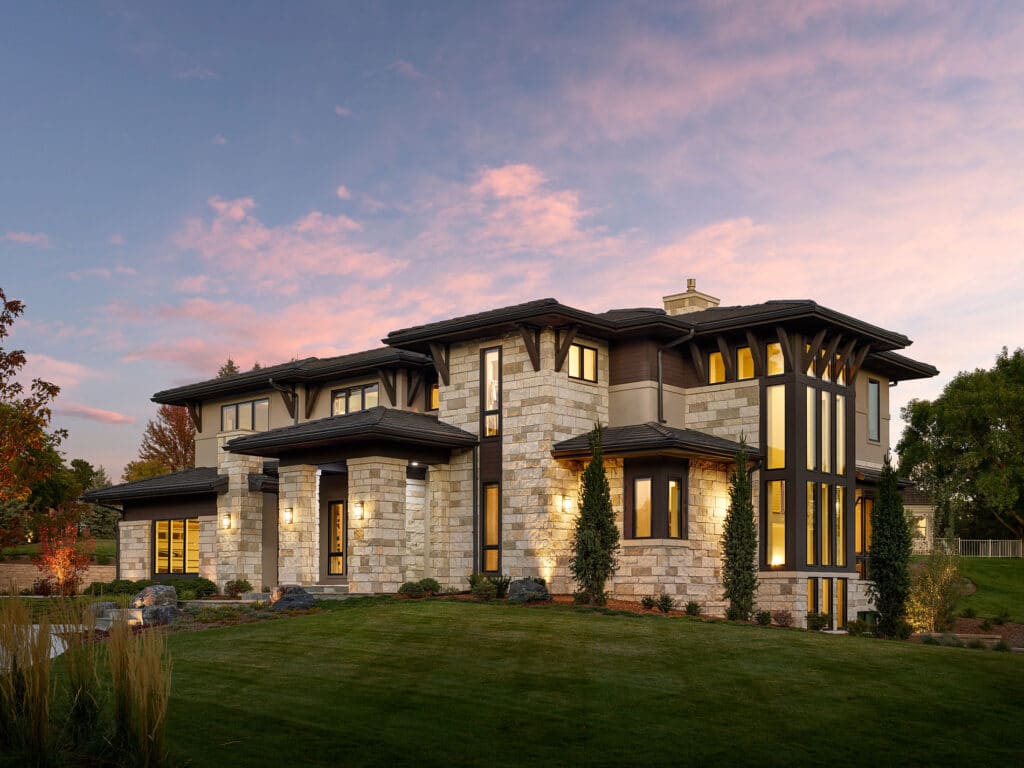
Many home buyers move to Colorado for the natural light, beautiful views, and scenic indoor-outdoor living. Large picture windows, expansive glass doors, and walls of glass can be some of the most striking architectural features in a custom home.
Fortunately, energy efficiency does not mean giving them up. Today’s high-performance windows often combine insulated glass, protective coatings, quality framing systems, and other technologies that manage heat transfer while maintaining views and natural light.
Window selections are an essential part of Thomas Sattler’s intelligent design-build process. Your design team can help you consider your windows’ placement and orientation, the amount of direct sun they receive, what views you want to preserve, and how the room will be used. We can also use shade to reduce unwanted summer heat while taking advantage of solar heat gain during colder months.
In this next section, we’ll explain how this approach works in a new home design.
Design Your New Home Around the Sun
Energy efficiency is more than a few energy-efficient appliances. The architecture itself matters.
When choosing a custom home floor plan, it’s important to think about your home site’s orientation, window placement, rooflines, overhangs, outdoor living areas, and room placement before construction begins.
For example, “daylighting” is an effective energy efficiency strategy for orienting your new home to take the best advantage of daylight, solar heat gain, views, and overall energy use. However, you also want to ensure your home’s orientation reflects your unique lifestyle.
This is why when Thomas Sattler designs a new custom home in the Denver area, we work with the homeowner to answer orientation questions such as:
- Where are the best mountain, golf course, or landscape views?
- Which rooms should receive the most natural light?
- Where will strong afternoon sun enter the home?
- Can roof overhangs or covered patios provide useful shade?
- Where should large glass doors connect the interior to outdoor living spaces?
- How can the home capture useful sunlight during colder months while managing excessive heat during warmer weather?
These decisions affect more than efficiency. They influence how bright your kitchen feels in the morning, how comfortable your great room is in the afternoon, and how naturally your indoor and outdoor spaces connect.
Integrate Optimal Heating and Cooling
Like the other design aspects we’ve covered above, your heating and cooling system should integrate holistically with your overall home design. This matters for both energy efficiency and daily comfort.
It’s a whole-house approach embraced by the Department of Energy, which looks at heating and cooling alongside insulation, windows, air sealing, water heating, and other parts of the home rather than evaluating HVAC equipment by itself.
This includes selecting high-efficiency cooling and heating equipment, as well as:
- Properly sizing HVAC equipment for efficiency and design aesthetics.
- Considering multiple comfort zones throughout the home.
- Designing ductwork for effective airflow.
- Planning ventilation and indoor-air-quality systems.
- Coordinating HVAC needs with window exposure, ceiling heights, and the home’s layout.
- Using smart thermostats and controls where they add real value.
You can get even more value from your HVAC system by selecting premium home appliances as you plan your new home’s design. From high-performance washers and dryers to energy-saving dishwashers and refrigerators, you can add layers of energy efficiency without giving up luxury-level living.
This same philosophy applies throughout the home. Your beautiful spa-inspired shower, designer faucet, or thoughtfully planned bathroom does not inherently need to be wasteful.
Use Smart Environmental Controls Where They Add Value
Smart home technology should do more than impress guests; it should improve daily quality of life. Of course, selecting the right technology depends on your goals for your custom luxury home.
If your goals include energy efficiency, comfort, and convenience, consider a smart thermostat, multiple HVAC zones, automated shades/window treatments, lighting controls, occupancy-based settings, or systems that allow you to monitor and adjust your home remotely.
For example, ENERGY STAR-rated thermostats use real-world data to demonstrate energy savings. Many also provide daily convenience through scheduling, remote access, usage information, and other features that help homeowners better manage heating and cooling.
Build a More Comfortable, Energy-Efficient Custom Home in Denver
A new custom home should perform as beautifully as it looks. A well-insulated building envelope, high-performance windows and doors, thoughtful solar orientation, efficient heating and cooling, smart environmental controls, and energy-conscious appliances and fixtures can all work together to create a home that supports both luxury living and energy efficiency.
If you’re considering building a new home in the Denver, Colorado area, explore our custom home-building process or visit the Thomas Sattler Homes Experience Center to see how thoughtful design choices can come together in your new home.
Ready to start planning? Contact Thomas Sattler Homes or call 303-771-5995 to discuss your vision for a beautiful, comfortable, and energy-efficient Colorado custom home.